Early settlers braved the wind and waves, crossed the perilous Taiwan Strait, and made a home on this island.
A faith, a settlement, and a shared memory came together to shape the Taiwan we know today.
Follow the paths of history and culture,
and discover Taiwan’s past, present, and future.
MONGA · THE BEGINNING OF TAIPEI
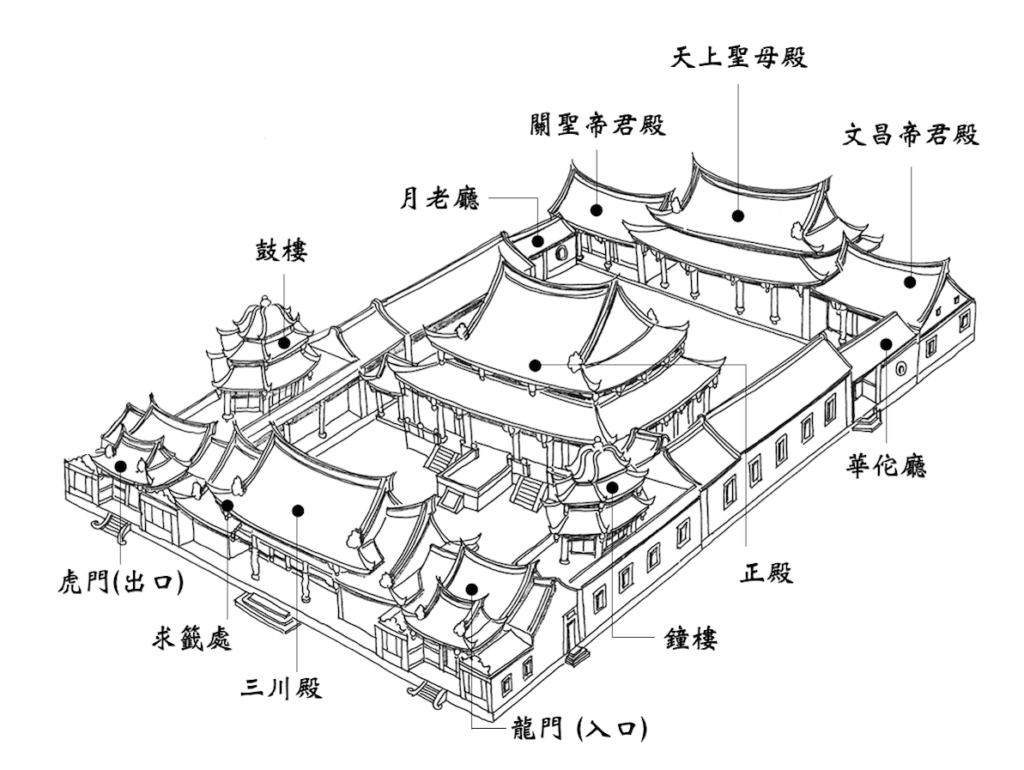
Longshan Temple
A Center of Faith
Early settlers crossed the perilous Taiwan Strait to cultivate a new life in Taiwan. Faced with unfamiliar surroundings and an uncertain future, they brought the deities of their homeland—and a faith that gave them strength and reassurance.
Temples were more than places to pray for peace and safety. They were centers where immigrants gathered, supported one another, and formed local bonds. Faith united communities, and those communities gradually grew into a city.
Beginning in Monga, journey through Taipei’s past, present, and future
02 · A NAME FROM THE RIVER
Monga
A Name Born from Boats on the River
According to tradition, early Han settlers arrived at the riverbank and saw the Indigenous Plains peoples traveling in dugout canoes. The name “Monga” is believed to be a transliteration of the Indigenous word for these canoes.
Boats carried goods and people, the riverbank became a place of trade, and streets grew around centers of worship. The name preserves the moment when Monga first met the river.
03 · A PORT OF TRADE
Dadaocheng
Ships Arrive by River
In the nineteenth century, cargo-laden ships traveled along the Tamsui River to Dadaocheng. Its wharves connected river transport with the market streets, where tea, textiles, Chinese medicine, and provisions were traded—linking Taipei to a wider commercial world.
As the waterways around Monga gradually silted up, the center of commerce shifted north. Dadaocheng prospered through its river port and tea trade, becoming a vital stage in Taipei’s path toward modernity.
River Port
Trading Hub
04 · THE MERCHANT STREET
Dihua Street
Where Cargo Built a Commercial Street
Goods unloaded at Dadaocheng Wharf moved along the street into merchant houses. Tea was exported overseas, while provisions, medicinal herbs, and textiles changed hands here, gradually making Dihua Street one of Taipei’s most prosperous commercial districts.
The long, narrow shophouses connect storefronts with rear warehouses and living spaces. Their ornate façades preserve the tastes and merchant identities of different eras. Traditional businesses still operate today, while a new generation has moved into the old buildings, allowing the street to keep evolving.
Tea
Provisions
Chinese Medicine
Textiles
Historic Shophouses
05 · FAITH & CULTURE
Historic Temples
Guardians of Community Life
Commerce brought prosperity, while faith drew communities together. Immigrants and merchants welcomed deities from their homelands and built temples among the market streets, praying for safe voyages and thriving businesses as they created a shared life in a new land.
Incense, festivals, and procession troupes move through the streets. These temples are not simply monuments preserved from the past, but living cultural spaces that remain part of everyday life.
Taipei Xia-Hai City God Temple
The temple watches over Dadaocheng, its residents, and traveling merchants. Though its forecourt is small, its worship and festivals are deeply woven into the neighborhood.
Dadaocheng Cisheng Temple
Devotion to Mazu has long watched over river traffic, while the food stalls outside the temple sustain an everyday gathering place for local residents.
Dadaocheng Fazhugong Temple
Dedicated to Fazhu Zhenjun, the temple bears witness to tea merchants pooling their resources to build a place of worship and to the neighborhood’s transformation through urban development.